

Ask a candidate why they like a stock and you will quickly learn whether they can think. It is a good company is not a thesis; it is a feeling. A real investment thesis is an argument, structured, evidenced, and able to survive a sharp interviewer's questions. Learning to write one is the single most important judgment skill in equity research. Here is how.
An investment thesis is where analysis stops being a collection of facts and becomes a point of view. It is also exactly what interviews and real desks test, because anyone can recite numbers, but few can build a defensible argument from them. The good news is that a strong thesis follows a structure you can learn, and the difference between a thesis that holds up and one that collapses is usually a few disciplined habits.
What a thesis really claims
At its core, a thesis claims that a stock is mispriced, and explains why. It is not a description of the company; it is an argument that the market has got something wrong, and that you have spotted it. That framing matters. If your view is simply that a company is good, ask yourself: is that already in the price? A thesis only has value if it identifies a gap between what the market believes and what you believe, and gives a reason for that gap. Without a mispricing, there is no thesis, only a profile.
The structure of a strong argument
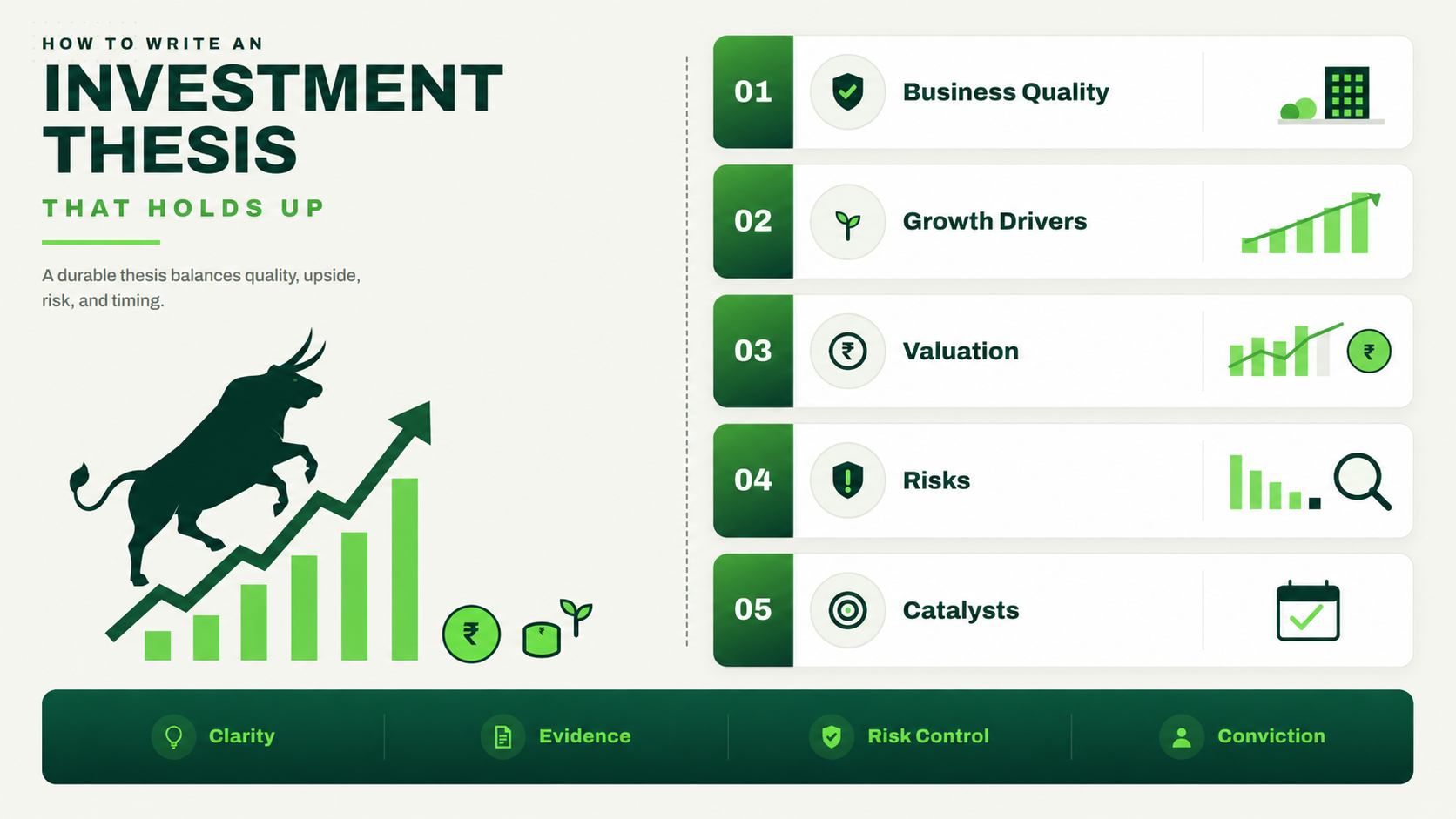
A strong thesis has a recognisable shape. It states the view in one clear sentence. It gives the two or three key reasons that support it, each grounded in evidence rather than adjectives. It identifies a catalyst, something that will cause the market to realise the value, because a stock can stay mispriced indefinitely without one. And it acknowledges the main risks honestly. View, reasons, catalyst, risks: master that structure and you can build a thesis on any company. Skip any element and it starts to wobble.
Assumptions: stating and stress-testing them
Every thesis rests on assumptions, about growth, margins, demand, competition. The amateur hides them; the professional states them plainly and then stress-tests them. Ask of each: what if I am wrong about this? If your entire thesis collapses when one optimistic assumption fails, it is fragile, and an interviewer will find that crack in seconds. The strongest theses rest on assumptions that are conservative, or at least clearly reasoned, so that even if you are partly wrong, the argument still stands. Knowing your own weakest assumption is a sign of real analysis.
Catalysts, risks, and the honest counter-case
This is where good analysts separate themselves. A weak thesis ignores the other side; a strong one engages it. State the catalyst that should unlock the value, and be honest about what could go wrong, and why you still hold your view despite it. Articulating the bear case, the strongest argument against you, and then explaining why you disagree, is far more convincing than pretending no counter-argument exists. It signals that you have genuinely thought, not just hoped. Interviewers respect the candidate who can argue both sides and still take a stand.
Writing a thesis an interviewer respects
Finally, express it well, because a thesis that cannot be communicated clearly might as well not exist. Lead with the view in a single sentence; an interviewer should know your conclusion immediately. Support it concisely with your strongest reasons, not every fact you gathered. Name the catalyst and the key risk. Keep it tight, a strong thesis is often just a few clear paragraphs or a two-minute spoken case. The discipline of saying it briefly forces you to know what actually matters, which is itself the mark of someone who understands the company.
Why most theses fail, and how yours can pass
Most theses fail for predictable reasons: vague claims that are really just optimism, hidden assumptions that crumble under one question, and no honest treatment of the counter-case. The fix for each is the same, discipline. Make a specific claim about a mispricing. State and stress-test your assumptions. Engage the strongest argument against you. A thesis built this way does not need to be right about everything to impress; it needs to show that you reasoned carefully and can defend your view under pressure. That is what holds up, in an interview and on a desk, and training you to form, support, stress-test, and defend a view under questioning is exactly what our applied teaching at Fin Maverick centres on.
Build a thesis that holds
Use this checklist every time you form a view:
- State your view in a single, specific sentence about a mispricing.
- Give two or three evidence-based reasons, not adjectives.
- Identify a catalyst that will close the gap you have spotted.
- State your key assumptions and ask what happens if each is wrong.
- Engage the strongest counter-argument, then explain why you still hold your view.
Frequently asked questions
What is an investment thesis?
A clear argument for why a stock is mispriced, with the assumptions, catalysts, and risks that support it.
What makes a thesis strong?
Explicit assumptions, a real catalyst, and an honest treatment of the counter-case.
How long should an investment thesis be?
Long enough to defend the view, often a few tight paragraphs.
Why do most theses fail in interviews?
Vague assumptions and no honest counter-case are the usual giveaways.